
What They Are, Why Your Grass Is Dying, and What Actually Works
If you’ve got circular patches of dead or thinning grass that keep getting worse every year, and nothing you try seems to fix it—you may be dealing with ground pearls.
This is one of the most frustrating turf problems we see in the Fayetteville, Vander, and Cumberland County area—and it’s often misdiagnosed and mistreated, costing homeowners hundreds (or thousands) of dollars with no results.
Let’s break it down clearly, based on North Carolina State Extension and Research guidance, plus real-world field experience.
What Are Ground Pearls? (Backed by NC State)
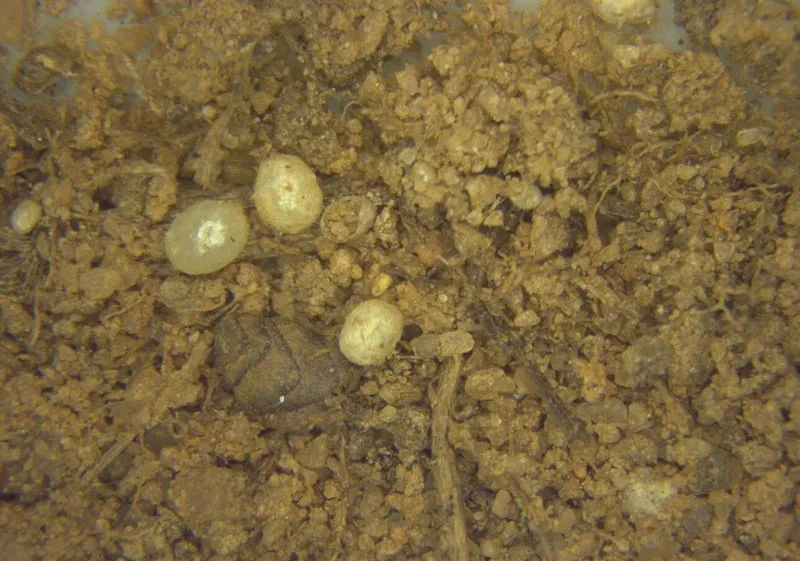
Ground pearls are tiny, soil-dwelling insects related to scale insects.
They live underground in the root zone and feed on grass roots—especially centipedegrass, which is the most susceptible turf in our region.
- They appear as small, pearl-like cysts in the soil
- Immature stages (nymphs) are often pink
- They can survive in the soil for years
👉 According to NC State Extension:
- There is no consistently effective chemical control
- Damage is often chronic and progressive
- Management focuses on turf tolerance and cultural practices
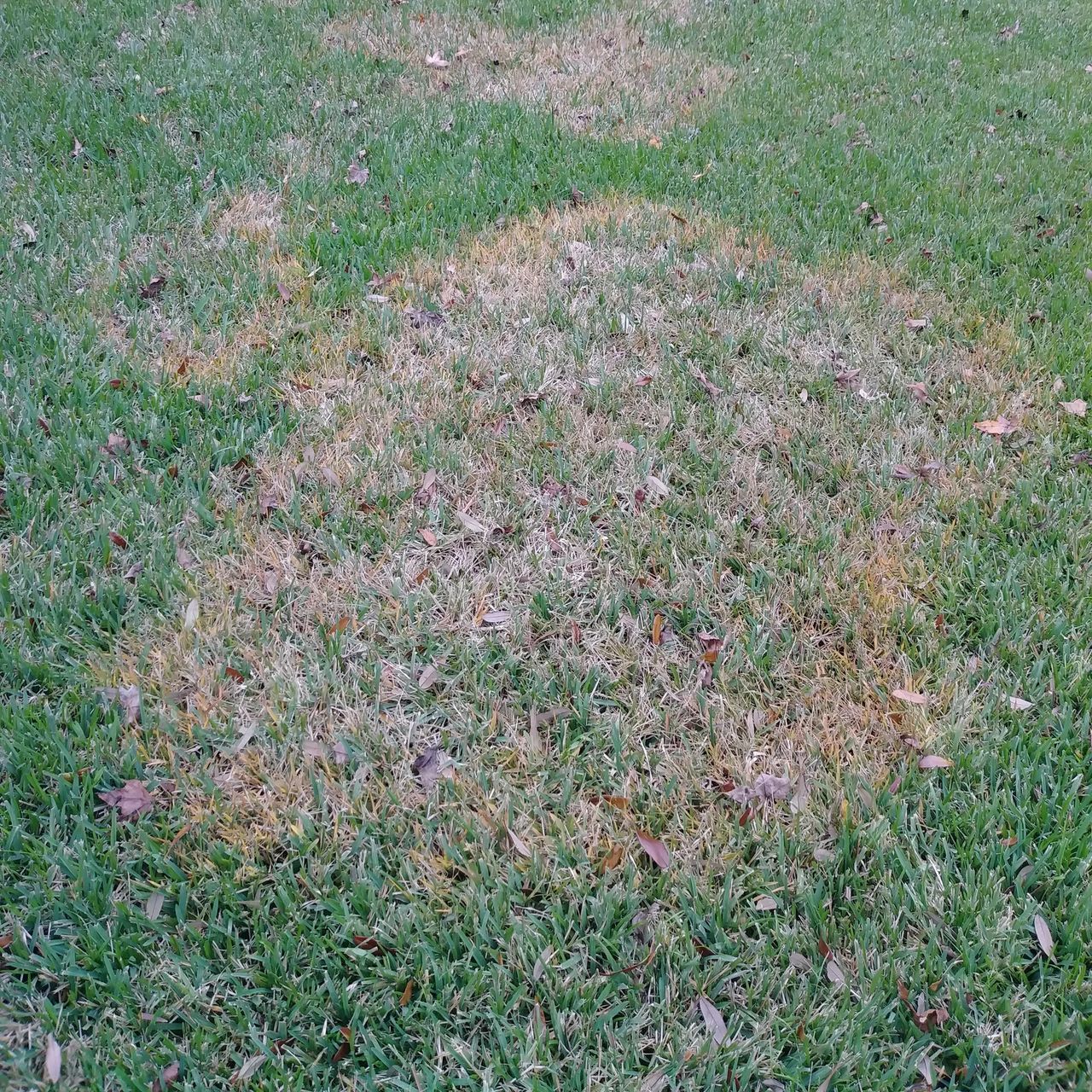
What Ground Pearl Damage Looks Like
Here’s what we consistently see in the field:
- Circular patches that start small and expand outward
- A clear “epicenter” where the problem began
- Patches get larger year after year
- Grass becomes thin → dies → weeds move in
- No response to fertilizer, water, or fungicides
This is where most homeowners get misled.
The #1 Mistake Homeowners Make (And It Costs You Money)
Most people assume:
“It’s fungus.”
So they:
- Apply fungicides
- Hire companies to spray treatments
- Spend money… repeatedly
And nothing improves.
That’s because:
👉 Ground pearls are NOT a fungal issue.
If you don’t physically confirm fungus, treating for it is just guessing with chemicals.
How We Actually Diagnose Ground Pearls (Professional Process)
This is not a “spray and hope” situation.
Here’s the correct process:
- Identify the transition zone (edge between healthy and declining turf)
- Cut or dig a turf sample
- Inspect 1–2 inches into the soil
- Look for:
- Pearl-like cysts
- Pink nymphs
👉 If you see them—you have your answer.
No guessing. No assumptions.
Can You Kill Ground Pearls? (Straight Answer)
No.
And anyone telling you otherwise is either:
- Guessing
- Selling something
- Or hasn’t read the research
👉 According to NC State Extension and multiple southeastern university trials:
- There is no reliable chemical control
- Even aggressive treatments have failed long-term
Short-term “improvements” often lead to:
Long-term disappointment
What Actually Works (Real Strategy)
If you’re dealing with ground pearls, you have three realistic paths:
1. Improve Turf Conditions (Limited Results)
You can try to help the grass tolerate damage:
- Proper fertilization (per soil test)
- Irrigation management
- Reducing stress
👉 This does not eliminate ground pearls It only helps grass survive longer
2. Stop Wasting Money on Misdiagnosed Treatments
This is critical.
If it’s ground pearls:
- Fungicides won’t help
- Random insecticides won’t fix it
- “Miracle treatments” won’t last
3. Turf Conversion (Best Long-Term Solution)
This is where real results happen.
👉 Bermuda grass is significantly more tolerant of ground pearls.
We’ve seen:
- Centipede lawns fail completely
- Bermuda lawns in the same conditions continue to perform well
This is the direction we recommend for:
- Severe infestations
- Repeated yearly decline
- Long-term property value
Real-World Case Insight (From the Field)
We regularly get calls where:
- Homeowner thinks it’s fungus
- Lawn has been treated multiple times
- Money has already been spent
We dig a sample → find ground pearls immediately.
At that point:
- We stop unnecessary treatments
- Explain the reality
- Lay out actual options
👉 That alone often saves the homeowner hundreds in wasted applications.
So What Should You Do Next?
If your lawn has:
- Expanding circular dead patches
- No response to treatment
- Persistent decline year after year
You need a correct diagnosis first.
Start Here
- Get a professional inspection
- Consider a soil test
- Evaluate whether your turf type is even viable long-term
Work With Someone Who Diagnoses—Not Guesses
At Blackman & Sons Lawns and Landscapes, we don’t:
- Spray blindly
- Sell treatments that won’t work
- Or guess at problems
We:
- Diagnose accurately
- Use plant science-backed decisions
- Recommend solutions that actually make sense long-term
Call to Action
If you think you might have ground pearls:
📞 Call or text: 910-236-6317 🌐 https://blackmanandsons.com
We’ll:
- Identify the issue correctly
- Save you from wasting money
- And give you a real plan forward
Bottom Line
Ground pearls are one of the toughest turf problems in North Carolina.
- You can’t spray your way out of it
- You can’t fertilize your way out of it
- And you definitely can’t guess your way through it
But with the right diagnosis and strategy—you can make the right decision the first time.